
New product development efforts provide key opportunities to test the underlying assumptions of a business model. As an entrepreneur, it is critical to continually refine your business model through customer interviews, market research and discussions with competitors, suppliers and distributors. Once you have early validation that you have a solution to a problem that is of great value, you can begin to build your early product concept and conduct minimal viable product (MVP) tests.
Wandering Bear Coffee, an early-stage venture founded by Ben Gordon '15 and Matt Bachmann '15, first leveraged this process in the Launch Your Startup course at Columbia Business School. Today, Wandering Bear produces and packages premium, ready-to-drink coffee for the home or office, and cold-brews over 5,000 pounds of coffee every month. Here, we follow their journey through the MVP process, which focused first on the coffee, followed by the packaging.
Matt and Ben had a shared affinity for home-brewed cold coffee, and believed they could offer like-minded coffee drinkers a new beverage option. They started with the basic assumption ("the Problem”) that consumers were drinking subpar iced coffee. Most iced coffee on the market is brewed hot and poured over ice, resulting in a bitter, acidic, watered-down drink. Iced coffee’s popularity is surging, and consumers are demanding better options. Matt and Ben’s earliest product development focused on taste and quality. Like scientists, they tested several variations of beans and brewing until they achieved their envisioned flavor profile.
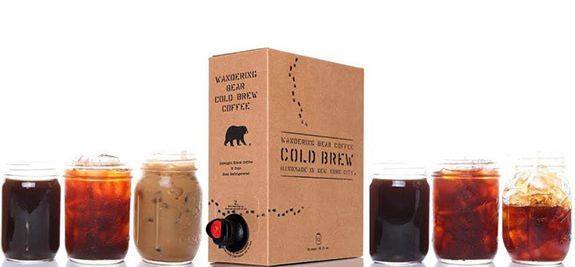
As they solicited feedback on their MVP coffee, they expanded their focus to the second core assumption: how to design a convenient method for customers to dispense the beverage at home or work. By studying the competition, they discovered that there were no pre-packaged options offering convenient access to the quality of an artisanal-style cold coffee. They had a flash of insight: inspired by the convenience of a stationary water filter, they resolved to put coffee on tap in the refrigerator. As they discovered, coffee – like wine – became stale after a few days if exposed to light or air. These facts led to a second insight: why not package their coffee like boxed wine, which would keep it fresh for a longer period, and allow for dispensing from a tap?
Research validated that no one else had tried this approach with coffee. Matt and Ben contacted the manufacturers of the packaging components used by the major boxed wine brands and asked: Would this work? What are the economics? How do we do this? Can we test it? The last question was critical, and the answer allowed them to move the MVP process forward. After several test runs, they identified the key benefits of this packaging solution: it offered dispensing convenience with minimal storage requirements.
Once they had the basic brewing process and packaging in place, it was time to solicit feedback from a larger, independent audience. They were invited by Columbia Business School to exhibit at NY TechDay — the largest startup fair in the world, with over 10,000 attendees in New York’s Pier 92 convention facility. They brewed more coffee than previous production runs, packaging the cold coffee in the box samples with makeshift labeling. They poured over 1,000 cups of coffee that day, discussed their packaging with hundreds of people, received dozens of business cards and met their first customers. Armed with extensive, constructive feedback and an early pipeline of enthusiasts and customers, they refined the product, creating the next MVP iteration. Three months later, Matt and Ben went to market with their first “fully functional” product: a 12-serving box of cold brew coffee that rests on the refrigerator shelf and dispenses from a tap.
ABOUT THE RESEARCHER

Jack McGourty
Jack McGourty Ph.D. is an adjunct professor of business teaching applied topics in entrepreneurship and innovation. He is the founder of Read more.