“Very ambitious, but not flaky” — that’s how Murray Low, director of the Eugene Lang Entrepreneurship Center, defines “outrageous” in the context of Columbia’s A. Lorne Weil Outrageous Business Plan Competition.
Each spring, student teams present two-minute elevator pitch videos — literally filmed in Uris Hall’s elevators — to a panel of seasoned entrepreneurs, venture capitalists, and faculty members who select five or six finalists to field judges’ questions. Winners receive cash prizes totaling $14,000. “The competition very much simulates the experience that entrepreneurs go through when they’re trying to get funding,” says competition founder and judge A. Lorne Weil ’71, CEO of Scientific Games Corporation and a member of the School’s Board of Overseers.
The competition has led to more than 30 thriving businesses — from liquid-filled cartridges that snap onto glasses to form instant mixed cocktails (Wix Industries, founded by Nick Friend ’11) to a website about relationships (Your Tango, founded by Andrea Miller ’02). Such success is not only a testament to the visionary thinking the competition inspires; it’s also indicative of a certain stick-to-itiveness. In the words of Winston Churchill: “Never, never, never give up!”
Ntiedo “NT” Etuk ’02: Play Hard, Learn More — Win Big
 >>The Idea: To get kids excited about learning through interactive stories — and rewards. “The outrageous goal was to become the next Sesame Street or Disney,” says Ntiedo “NT” Etuk ’02, who won the competition in 2002. Kids would complete online quizzes about each story they read, racking up points to earn prizes like bicycles and CDs.
Prior to business school, Etuk was a tutor with Big Brothers Big Sisters while he worked as a policy analyst at a major credit card company. “It got me thinking about the effectiveness of rewards systems among adults,” he says. “Why would it be any different for kids?”
>>The Business: DimensionU (formerly Tabula Digita) produces educational video games for K–12 students that build math, literacy, and science skills. Inspired by his own childhood passion for gaming, Etuk narrowed his focus to software not long after graduation. Students in more than 70 school districts across the country — and in English-speaking regions around the world — compete with one another and earn points toward rewards from vendors including Amazon.com and Best Buy.
The World Economic Forum recently named DimensionU a Technology Pioneer and EdNet included it among its “Shining Star” products. Last summer, the company honored the winner of its first annual National Scholarship Tournament with a $50,000 scholarship — plus Lady Gaga concert tickets and a photo op.
>>The Takeaway: Stay positive. “If you look at some of the most revolutionary companies — Apple, Amazon, FedEx — they began as ideas that people didn’t believe could work,” says Etuk. “Be flexible, but don’t quit.“
Jeremy Miller ’10: The ABCs of FSAs
 >>The Idea: To make Flexible Spending Accounts (FSAs) easy for employees to use. FSAs allow people to put aside pre-tax money to pay for insurance co-pays, prescription medication, and other health products. Employees base their contributions on estimated healthcare costs for the coming year; any money not spent by year-end is forfeited.
“It’s a use-it or lose-it account,” says Jeremy Miller ’10, who refined his idea through the competition, winning second prize in 2009 and an honorable mention in 2010. “But not everyone can accurately predict their costs.” Some 35 million Americans have FSAs, says Miller, but in 2010 alone, $450 million was left unspent in these accounts.
>>The Business: FSAstore.com, which Miller launched with Azar Gurbanov ’10 in June 2010, features thousands of FSA-eligible products, services, and healthcare providers. With 2011 regulations limiting spending on non-prescription products, FSAstore.com educates consumers through an online learning center. The company will also contact members’ doctors for prescriptions for over-the-counter medicines that now require prescriptions to be FSA-eligible.
>>The Takeaway: If you have an idea, “just do it,” Miller says. “That motto was even my log-in password for my Columbia e-mail account. It helped me keep pushing forward.”
Shazi Visram ’04: Helping Parents Think Outside the Jar
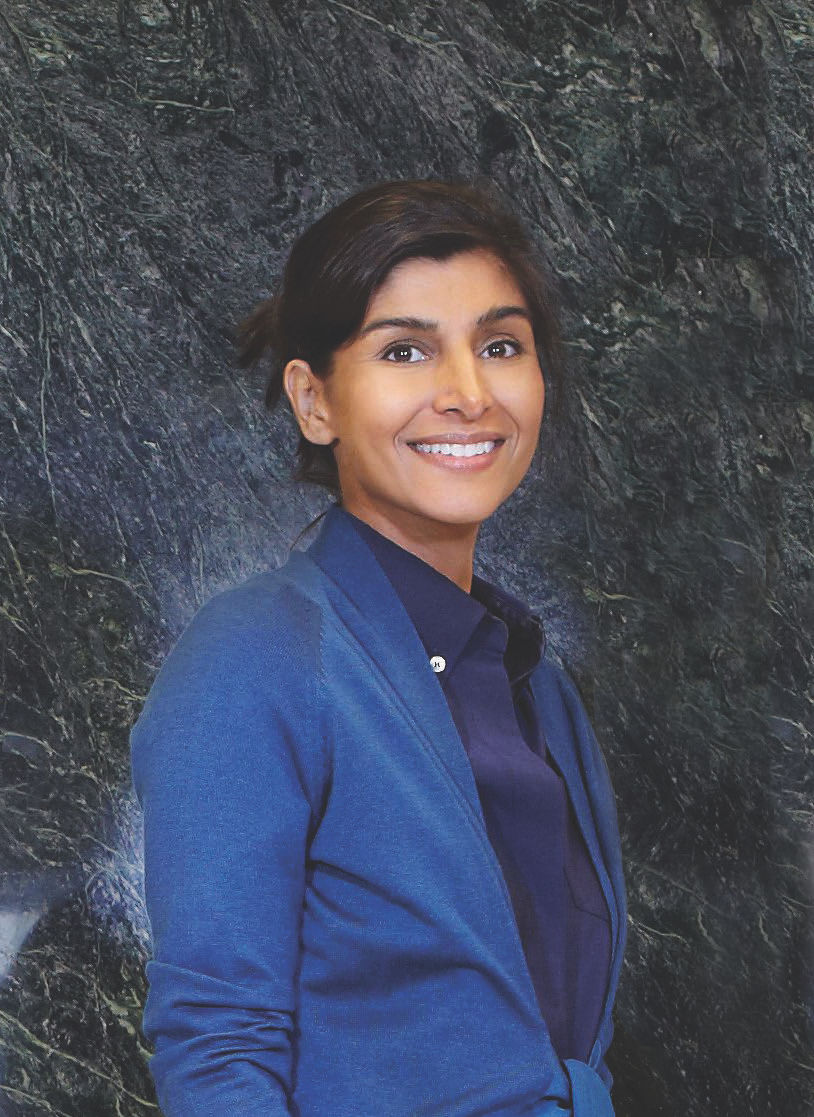 >> The Idea: To revolutionize the way babies are fed in this country. “It was outrageous to me that you could spend $1,000 on a stroller or $100 on a pair of fancy baby booties, while there were very few products that could really improve babies’ health,” says Shazi Visram ’04, whose idea for a line of organic baby food was voted an audience favorite in 2004. “I knew that it could be huge.”
>> The Business: Happy Family (formerly Happy Baby) is the leading premium organic baby and toddler food brand in the United States, offering everything from frozen baby and toddler meals and the first dry cereal with probiotics (potentially beneficial dietary supplements) to pureed foods delivered in pouches — eco-friendly packaging that is BPAfree.
Last year Happy Family ranked No. 2 among food and beverage companies in Inc. magazine’s annual listing of the 500 fastest-growing companies — the same year the magazine named Visram among its top 10 female entrepreneurs. Whole Foods and Target — which both sell Happy Family products — have dramatically increased the space allotted to organic baby products in the past five years. “We’ve created a product that has such a high demand, we’re actually creating a positive environmental impact,” Visram says. “We are helping parents put fewer pesticides into their babies’ growing bodies and into the soil.”
>> The Takeaway: Be persistent. “It’s these outrageous ideas that seem impossible and that are truly visionary that are the most challenging,” says Visram. “If you are on to something and have the passion and persistence to see it through, it can be one of the most rewarding things you ever do.”
Matthew Wang ’05: At the Top of His Games
 >> The Idea: “Remember the Sunday funny pages? We planned to produce an ad-driven paper that was all comics,” says Matthew Wang ’05, who placed third in the competition in 2004 with his friend and now business partner, Brian David-Marshall.
A devoted comic book and games fan — Wang even wrote a research paper on Dungeons and Dragons with professors from Columbia’s Teacher’s College after business school — Wang shifted his focus to games after graduation. “Both comics and games are about building experiences for people,” he says.
>> The Business: To Be Continued is a game-design consulting company with services that include game development, intellectual property origination, and industry insights. “What makes us unique is that we offer a full suite of services, from corporate strategy on gaming to the actual manufacturing of an online or offline game,” says Wang.
The company recently designed a best-selling board game under the Twilight movie brand for Cardinal Industries and launched a Facebook card game with 5th Planet Games called Clash of the Dragons — which Wang plays every day.
>> The Takeaway: Stop talking already. “There’s a big difference between talking about ideas and making them happen,” says Wang. “The competition really gave us the confidence to go for it and take the risk. It opened my eyes to the possibility of actually starting a business and being an entrepreneur.”
Jennifer Wright-Laracy ’09: Delivering a Better Pizza Box
Jennifer Wright-Laracy '09 was featured on "Shark Tank" -- and got two bites!
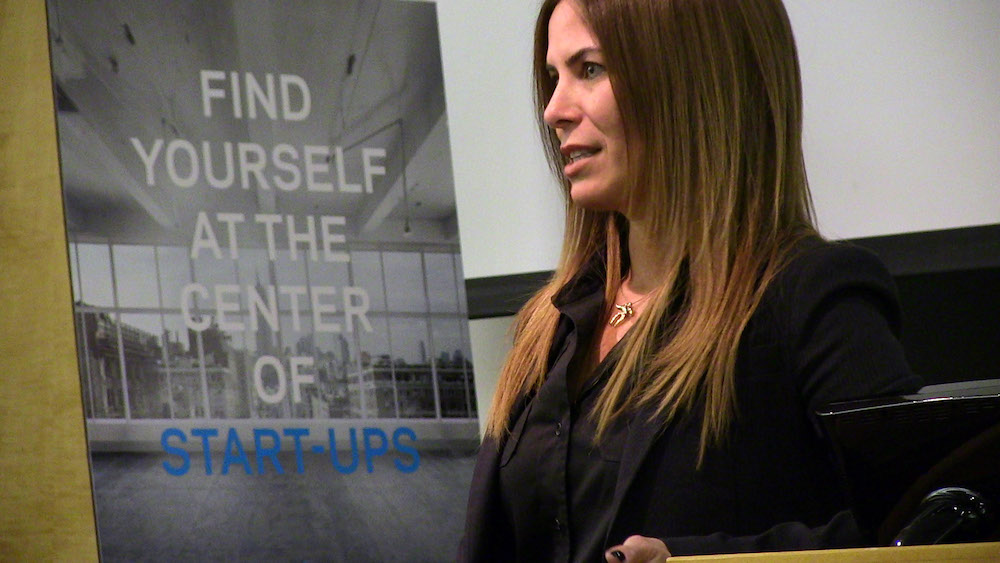 >> The Idea: To provide an alternative to impractical, outdated, and wasteful pizza boxes. “The pizza box hasn’t changed for decades,” says Jennifer Wright-Laracy ’09, who took second place in the competition in 2008. “How many times have you seen pizza boxes stacked on top of trash cans because people can’t fit them inside?”
William Walsh, Wright’s late business partner, consumed a lot of pizza as a college football player and started ripping off the tops of boxes to use as plates, then breaking the boxes down to recycle. “Why hadn’t anyone thought of changing this before?” Wright wondered.
>> The Business: Ecovention developed the GreenBox, a pizza box made of 100-percent recycled material. Several national pizza chains have expressed interest in the product, and the company is already working with national distributors like Whole Foods and pizza chains like Maryland–based Pizza Boli to make the new boxes available.
Last summer, Ecovention launched the SmartBox (made of partially recycled materials) with Pizza Hut Costa Rica and Telepizza in El Salvador and Guatemala. Both types of boxes break down into convenient serving plates, and the bottom halves convert into storage containers. Strategically placed perforations and scores allow for easy disposal in standard-sized recycling bins. A new pizza restaurant “doggie” box and compostable single slice container are also available, and a recyclable, multifunctional hoagie box is in the works. All three products are available in designs that are made from 100-percent recycled or partially recycled materials.
>> The Takeaway: Believe in your idea, even when no one else does. “Sheer tenacity separates successful entrepreneurs from unsuccessful ones,” says Wright. “If you’re ambivalent about your product or service, it will be that much tougher to stick it out during the not-so-rosy times.”
Want to see pitches from this year’s competition? Murray Low’s April 24 column in the Huffington Post features 12 student videos from the event.