Gone are the days when wine was red or white and always expensive. Consumers today have more choices than ever before. Natural or organic? Merlot from France, Italy, Chile, or Oregon?
“The standards, technology, and knowledge around wine-making mean that every part of the world can now make really good wine,” says Philip James ’05, whose Lot18 is giving consumers direct access to artisinal wines formerly crowded out of the market.
Wine has never been as affordable as it is today, when wine importers like Michel Abood ’02 are bringing tasty $20-and-under bottles from boutique family vineyards to shops across the country. As the Columbia Business School alumni featured here are proving, it’s a space ripe for innovation.
Anu Karwa ’04: Sip, Swirl, Enjoy
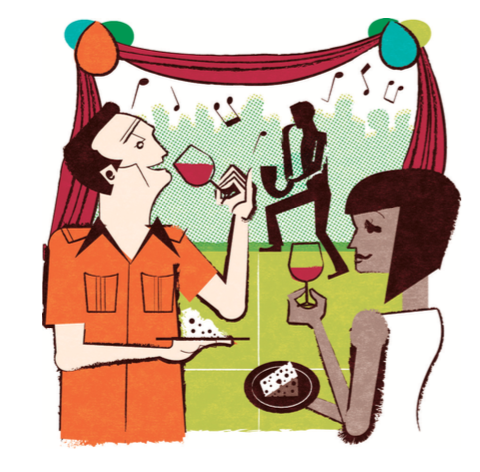
A few years after graduation, Anu Karwa ’04 hosted a wine tasting in her apartment. Her goal was to raise money for Sakhi, a nonprofit that supports South Asian women escaping abusive relationships. She invited more than a dozen friends, told them to bring their checkbooks, and developed a theme.
“It was March, which was women’s history month, so I featured all women winemakers and paired the wines with chocolates and cheese,” Karwa says. “By the end, everybody said, ‘you need to turn this into a business.’”
Karwa followed that advice and launched Swirl Events in 2007, offering wine tastings throughout the greater New York City area. Clients range from top law firms and banks to bridal showers and birthday parties. Karwa’s main objective: to create a fun experience that lingers. “We’re creating a brand so that every time you experience a Swirl event, it’s going to have the same feel to it. It’s a fun, lively approach to enjoying wine.”
Today, Swirl employs a team of eight wine experts and an event coordinator. Karwa, who also does marketing for Peeled Snacks, founded by Noha Waibsnaider ’02, focuses on Swirl’s big-picture strategy. “I would love for people not to feel so intimidated by wine,” Karwa says.
Go green. Swirl Events now offers an “eco-chic” package, which features all organic or biodynamic wine. “Grapes are one of the most heavily sprayed fruits out there,” Karwa says.
Take 20 minutes. “People often keep white wines too cold and reds too hot. About 20 minutes before friends come over for dinner, I put my reds in the fridge and take my whites out. Then they’re both at the right temperatures.”
Michel Abood ’02: Hidden Values, Priced Right
It’s the treasure hunt that Michel Abood ’02 really loves — “that moment when you find something really well made and really well priced, from a small family producer who has maybe 10 or 20 hectares out in the wilderness and is making fantastic wines that nobody’s heard of.”
Making those wines more widely available was the impetus behind Vinotas Selections, the wine importing company Abood founded in 2008. Nearly all the company’s wines — carefully selected vintages from boutique family wineries in France, Spain, and the United States — retail for under $20. “I was very frustrated that people would say, ‘oh, I spent $15 and got a bad bottle of wine,’” says Abood. “That should never happen.”
Abood recently commissioned a winemaker in Southern France to make a red and two whites labeled with Vinotas’s own brand, Terre du Sol, which retail between $10.99 and $12.99.
Visiting family in France in the 1990s, Abood often stumbled on out-of-the-way wineries making unexpectedly good — and affordable — wines. Keen to learn more about the art and science of wine, he earned a certificate from New York City’s International Wine Center in 1999.
“I love seeing that ‘aha’ moment when people taste something good,” says Abood, who enjoys hosting tastings for his clients. “I get to tell people part of the wine’s story, and then the wine speaks for itself.”
Look for natural wines. “Producers of natural wines use no chemicals and no sulfites, yeasts, or sugars, so these wines can be a little risky. Sometimes you’ll find bottles that are spoiled or bottles that re-ferment and then explode. But when natural wines are good, there’s a certain energy to them that’s fantastic.”
For a “wild and wacky ride” try Pascal Pibaleau’s sparkling rosé, La Perlette. “He’s making some really funky but fantastic organic wines. This particular wine starts out fruity but ends very nutty and dry.”
Christy Frank ’00: Little Shop of Conversations
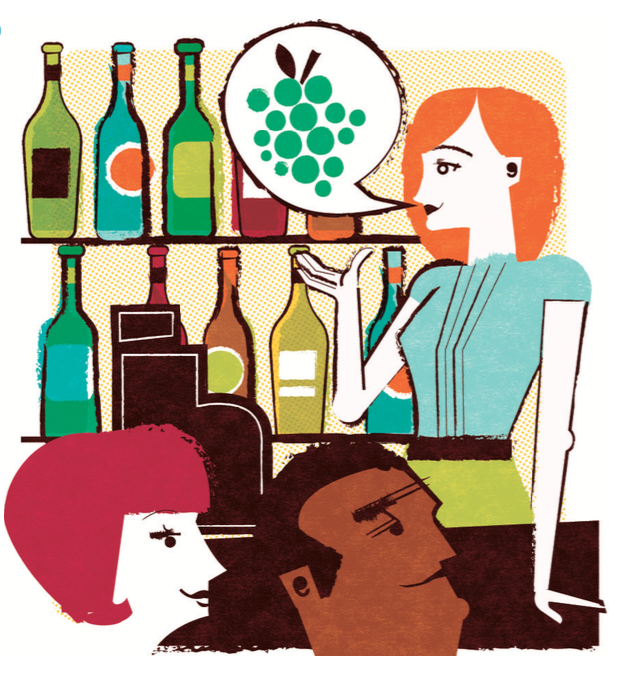
“Fine Wine. No Attitude.” That’s the guiding principle of Frankly Wines, the shop Christy Frank ’00 opened in New York City’s Tribeca in 2007.
But demystifying wine — that’s not on the menu. “I love the mystery of wine,” says Frank. “I don’t want to dumb it down; I want to remove the snobbery. I want to engage people and start conversations about wine.”
To foster those conversations, the 320 square-foot shop feels more like a wine bar than a store. Winemakers stop by to host frequent tastings, sometimes accompanied by live music. On Cinco de Mayo, the shop offered margarita samples.
When a customer is looking for a dry white wine, Frank and her team don’t just point them to a shelf of Chardonnays. They ask questions. Lots of them. “We take the time to help people really understand what they want,” says Frank. The shop also offers educational cases of wine, including one that illustrates the different meanings of the term “dry.”
Before venturing out on her own, Frank worked for seven years for Moët Hennessy USA, the wine and spirits division of LVMH Moët Hennessy Louis Vuitton, most recently as the manager of the US business for the company’s Australia/New Zealand portfolio.
It was getting to know wine storeowners across the country that gave Frank the retail bug. “I was so impressed by their knowledge,” she says. “With wine, there’s always so much to learn and discover.”
Don’t be too precious.“Pour yourself a glass, and if you feel like the wine could benefit from air, let it breathe. If you’re at a restaurant, engage the people working there and tell them what you like.”
“I really love wine” is not a valid business plan. “We’re always told to do what we’re passionate about. But something about this very glamorous industry can cloud people’s judgment. Make sure you understand all of the nuts and bolts that go into selling the product. Retail is mostly about people. Even if you do love wine, you also have to like talking to the public every day.”
Eric Woods ’00: Bottles on the Block
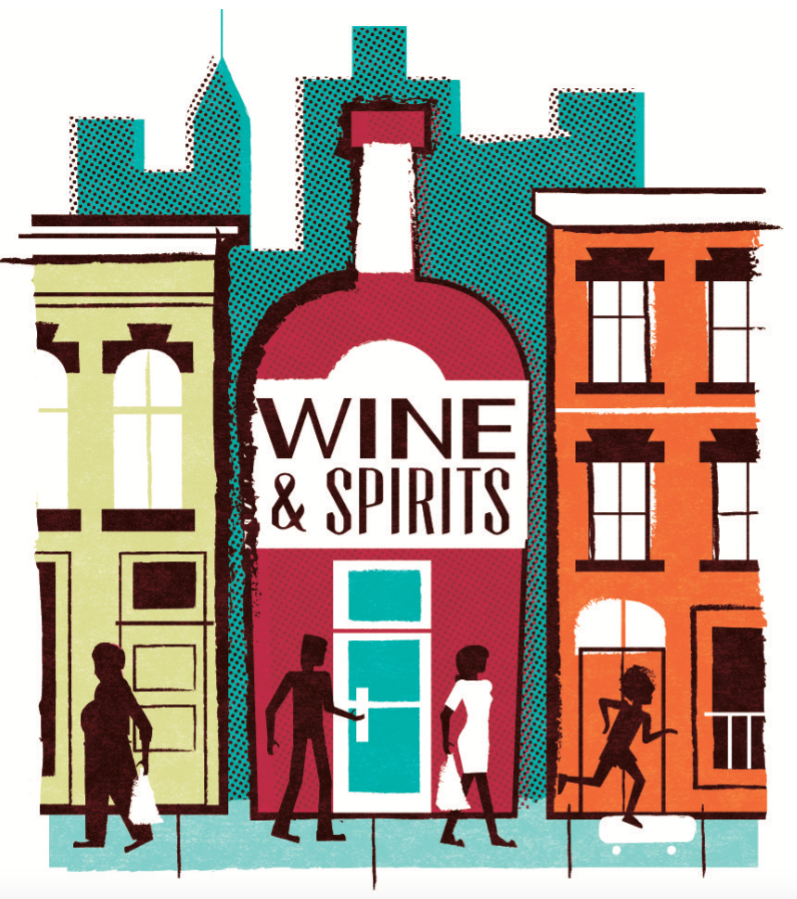
While working at Goldman Sachs and living in Harlem, Eric Woods ’00 was often too tired to enjoy wine at home. “In most Manhattan neighborhoods, everyone has a wine store three to five blocks from their apartments,” Woods says. “But my neighborhood didn’t have any wine stores, so if I wanted wine at home, I had to schlep it on the subway.”
As Woods watched his Harlem neighborhood being transformed by new restaurants and renovated brownstone apartment buildings, he knew the area could support a wine store, too. Working with his college friend and business partner Jai Jai Greenfield, Woods opened Harlem Vintage in 2004.
Not only is the store unique because of its location — “People thought we were absolutely crazy to open a retail boutique in Harlem,” Woods says — it‘s also innovative in its organization. Traditionally, wines are displayed according to region of origin. Convinced that the average customer doesn’t understand that the same grape is called different things in different countries — a Bordeaux, for example, is also a Merlot — Woods sought to organize the store in a way that makes the most sense to customers, grouping wines by grape rather than by region. “All the Rieslings are together, all the Chardonnays are together, all the Sauvignon Blancs are together, et cetera,” he says.
Harlem Vintage also focuses on wines produced by women and people of color, drawing from the dizzying number of wines on the market, which Woods says is the most challenging aspect of the industry. “There are an infinitesimal number of wines being produced,” says Woods. “And as technology changes, the number of regions where they’re produced grows every day.”
Family tradition. “My father is a wine aficionado and has a wine cellar at home. He used to let me choose wines for family dinners. I call wine the fifth food group.”
Keep it bubbly. “When bringing wine to a party, Prosecco or Cava are always good choices. You can never have too much bubbly at a party.”
Chris Riccobono ’07: Winetube
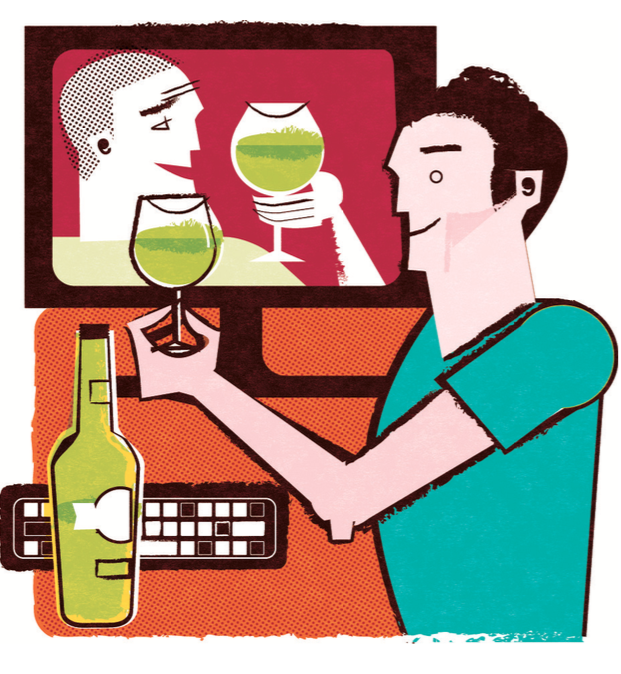
When Chris Riccobono ’07 was at the 2009 Bordeaux “en primeur” tastings — where barrel samples of the newest vintage are previewed by wine merchants, brokers, and critics before they are bottled and brought to market — he noticed that he was one of the only people there with a video camera.
Riccobono was making short videos for his recently launched video blog, Pardon That Vine, which today features more than 500 videos of wine tastings and reviews, interviews with winemakers, and mini-tutorials on how to taste wine. “I knew that video was going to be a part of every business — even wine education,” says Riccobono.
Part of the appeal of the blog — which quickly won thousands of followers, not to mention requests for reviews from winemakers around the world — is its casual approach. Most of the videos feature a casually dressed Riccobono, seated in his Hoboken kitchen, swirling wine around his mouth and then plainly describing what he tastes. Riccobono invites viewers to buy a wine that he has reviewed and then taste it along with him.
“Traditional wine courses can make things way too complicated — for example, students may spend a lot of time talking about the different sides of the tongue,” says Riccobono. “For me, that takes the fun out of it. I want people to think about wine on more basic terms.”
Untuck your shirt. In June Riccobono launched UNTUCKit, a men’s fashion company that designs shirts to be worn untucked — with styles named after wines. The brand has already been highlighted by the Wall Street Journal and USA Today.
Bring your own wine. “People don’t seem to know that most of the time in New York City you can bring your own wine to a restaurant, even when there’s a wine list. Often you’ll get better value: you’ll pay maybe a $30 corkage fee for bringing an $80 bottle of wine rather than drinking a $20 bottle of wine that cost you $100.”
Philip James ’05: Insider Access
For a few months in 2010, Philip James ’05 was CEO of two online wine powerhouses, Snooth and Lot18.
Snooth, which James founded in 2006, had taken flight as the largest wine social networking site, with millions of reviews of hundreds of thousands of wines. Lot18, offering a curated selection of artisanal wines, was launching and already raising money. Millions in venture capital would later flow in from the likes of Accel Partners and NEA.
“Very quickly, Lot18 became more than a full-time job,” James says. By March of 2011, the company surpassed $1 million in monthly transactions. It grew from six employees in 2010 to more than 60 today based in New York, California, and France.
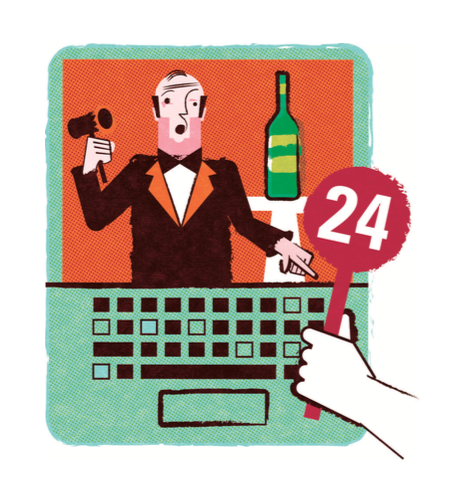
Lot18 combines the spirit of old world auctions — where consumers were able to bid on rare finds at great prices — with 21st-century efficiency. A team of procurement experts selects wines from around the world for their superior taste and value; each product is then available on the site for a limited time. Once you plug in your zip code, Lot18 will determine which wines can be shipped to you legally — “navigating an incredibly complicated infrastructure of state regulations,” says James.
“We’re connecting boutique quality wineries — those that are often crowded out by big brands — directly with consumers,” says James, “and helping consumers navigate an industry that can be notoriously confusing and intimidating. Helping people on both sides is the most satisfying thing.”
It’s time to change an antiquated distribution network. “We hope to create an industry where the quality of the product — rather than its fragmented availability — drives sales.”
Look out for orange wines. “Winemakers are starting to make white wines like red wines; if you leave a white wine in contact with the grape skin for a long time, it actually ends up a very deep orange hue. They have a lot more complexity. It’s a new piece of the market.”
Thomas Flickinger ’87: Fine Wine, Anytime
For Tom Flickinger ’87, a personal touch is key.
“We will not sell a wine that we have not physically touched and seen,” says Flickinger, whose online store, Flickinger Fine Wines, features fine and rare wines from established collectors in the United States and major wine merchants in the UK and Europe. “We interview the consigners to make sure we know where each wine is coming from.”
Giving customers high-quality products — when they want them — is crucial. All wines featured online are available for immediate delivery. “We focus exclusively on retail,” Flickinger explains.
“Rather than having to wait for the next auction, customers get immediate availability.”
 For Flickinger, finding a career that fit was a lot like finding the right wine for a special occasion. After marketing stints at General Foods, Quaker Oats, Life Fitness, and Arthur Anderson, Flickinger found himself at KP&G focusing on audit and tax marketing.
“I’d always loved wine,” says Flickinger, recalling annual trips with his father to California during his early professional years. “We’d end up in wine country on the weekends, tasting California wines. Since graduating, those trips helped build a large collection.”
Those experiences stuck with Flickinger, so much so that when a friend coaxed him away from KP&G to sell wine, he jumped at the chance. Today, his enthusiasm for offering the best prices and customer service for top-shelf products remains high. “Since we started this business, I’ve never looked back,” Flickinger says. “It’s fun to go to work every day.”
Decant with care. “Older wines need to be decanted carefully to remove the sediment. How you handle a bottle of wine really depends on the vintage.” Before you uncork, Flickinger recommends checking CellarTracker.com, a database of tasting notes for a range of vintage wines.
Keep it low-key. Flickinger’s number one piece of advice for aspiring entrepreneurs: “Don’t spend a lot of money on flash. I believe in starting small and building from the ground up — not getting too big too fast.”
Michael Preis ’01: A Vintage Career
It’s the hugely fragmented nature of the wine industry that most appeals to Michael Preis ’01. “With thousands of brands vying for the interest of retailers and restaurateurs, it’s an incredibly dynamic place to generate brand awareness,” says Preis, a vice president at Palm Bay International, the third largest importer of wine in the United States. And there are other appealing aspects of the business, too, says Preis: namely, the wine.
Words of Wisdom: “Follow your passion rather than merely chasing dollars.”
Favorite Course at Columbia: Professor Michael Feiner’s High-Performance Leadership
The core of Palm Bay’s business lies in identifying quality wines around the world — often those produced by small family vineyards — and handling almost every aspect of bringing them to the US market. Palm Bay’s eclectic portfolio of wines caters to both fine, independent restaurants and such mass-market franchises as Olive Garden, which — according to Wine Spectator magazine — sells more wine than any restaurant in America.
Preis has seen the company triple its business during the ten years he’s spent working his way up through marketing. The lion’s share of imports come from Italy, but Palm Bay has branched out in recent years and now partners with more than 50 wineries in 11 countries, including Argentina and New Zealand. As part of his job, Preis routinely travels to wineries abroad and develops relationships with local winemakers. “The wine business is a conglomeration of all the things I really love: travel, restaurants, food, and good living,” he says.