
Elected officials receive a deluge of letters and emails every day. Out of necessity, this inbound written correspondence is usually grouped by topic and replied to by mass mailing. Social media is also largely overlooked by staffers due to its sheer volume. For this reason, many people — including former staffers themselves — believe that phone calls are the best way of ensuring a message gets through to a representative. Even so, attempting to make contact via telephone can come with its own set of obstacles, including long wait times and full voicemail boxes, both of which can be significant deterrents to the average person hoping to reach their representative.
Nathaniel Teichman '16 created an app called Stance to remove these barriers and facilitate what could otherwise be a futile process. Stance uses your location to identify your representatives and allows you to record a voice message for them. The app then automatically navigates Congress’s phone tree to deliver the message, and if the recipient’s voicemail box is full, it continues to repeat the attempt until the voicemail is eventually delivered.
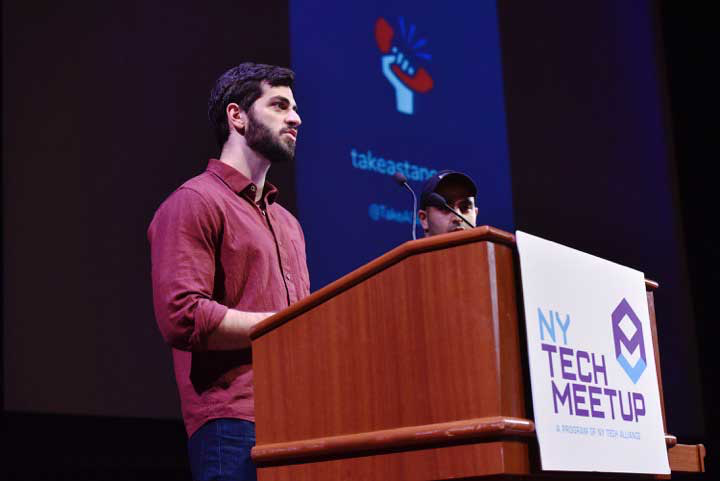
"The idea for Stance came about after I attended a political rally," recalls Teichman. "The organizers encouraged everyone to make phone calls to their members of congress. As they called, they received a busy signal, or were placed on hold for over an hour to deliver a twenty second message, or worse, the voicemail would be full." As COO of an audio startup called Ense (created by Venmo co-founder Iqram Magdon-Ismail), Teichman was able to leverage the collective insights from his colleagues and used Ense’s technology to build Stance.
Since its launch in March, Stance has had over 25,000 users — 45 percent of whom are repeat users. "Of course, we wanted to create a tool that would make it easier for people who were already contacting their government officials, but one of the main focuses was enabling people who were getting engaged for the first time," says Teichman. "We wanted to make it simple and painless for the average person get their voice to their representative."
We wanted to make it simple and painless for the average person get their voice to their representative.
Looking ahead, Teichman envisions extended uses for Stance — somewhat unexpectedly — on the receiving end by helping elected officials react to their constituents’ calls more effectively. "These offices are understaffed and they’re using old technology with antiquated phone systems that fill up very quickly and are painful to track and monitor," Teichman noted. Stance could potentially ease this pain point by helping representative offices handle voicemails and store the information received through a cloud structure. This approach would allow for greater insights into the neatly-aggregated data and in turn, enable offices to respond more quickly to constituents. "There are a lot of interesting possibilities down the road," says Teichman. "I’m grateful for my experience at CBS — it’s helped me look at a landscape from a higher level to find what’s missing, and then build a framework to capture the opportunity."