
 On the last day of August 2014, NBA player Kevin Durant tweeted, “Excited and humbled to sign back with the swoosh.” This highly anticipated announcement came after months of courtship from both Under Armour and Nike, with each offering escalating bids for the coveted endorsement of the NBA superstar. Under Armour ultimately lost the bid to Nike – but its aggressive tactics left a big impression.
Under Armour CEO, Kevin Plank told Bloomberg Television “If you have a deal, there’s no deal too big for us.” Under Armour topped Nike’s original bid of $200M, forcing Nike to increase its offer to $350M. “Do I take pleasure in that they paid $150 million more than they planned on paying? Absolutely.”
Though boastful, these words of confidence are rooted in business reality. In a world where Nike hasn’t faced significant challengers in US market share or endorsement deals, Under Armour is gaining momentum. At the end of 2014, Under Armour overtook Adidas and became No. 2 in US market share in the sportswear category. While Adidas’ sales fell 20-30 percent in apparel and shoes, Under Armour’s apparel sales grew 17 percent, and it’s relatively young line of shoes had a 34 percent bump in sales. Looking through the lens of brand strategy and marketing tactics, it is easy to see why.
Plank founded Under Armour to “build the better sports shirt” at a time when wicking materials were still rare in the category. The company continues to launch new products fueled by technological innovation thereby putting pressure on the competition. In the past few years, its portfolio has expanded to address more sportswear needs – launching shoes and a women’s line, for example. It also branded and incorporated its signature innovations (Infrared, Magzip) across its product portfolio. These efforts have created both clear brand differentiation and functional benefits to meet changing consumer expectations.
At the core of Under Armour’s brand lies its credo, a fierce, passionate call-to-action for competing and winning, encapsulated by its two-word tagline – “I will.” It has excelled at connecting its functional benefits to the emotional aspects of sports, and it developed a communications strategy that dripped with attitude and resonated with a well-defined consumer target. Initially, this fierce image limited its appeal to a hard core male audience, but the company has ambitiously and effectively reached out to a wider base that includes women focused on fitness.
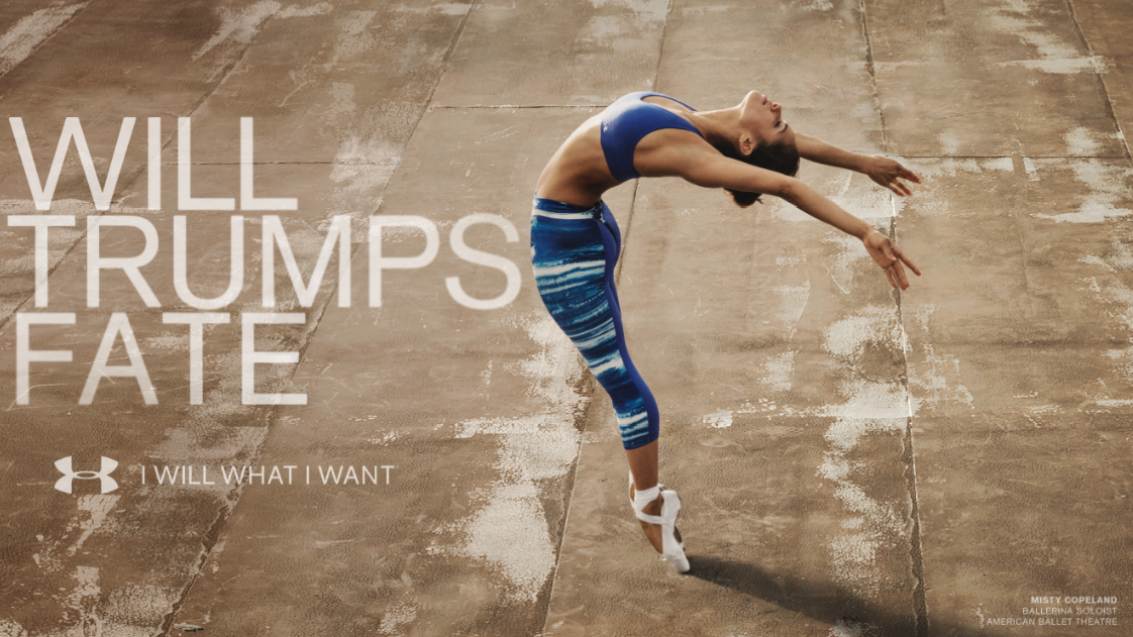
A print advertisement from Under Armour's recent campaign featuring Misty Copeland, the first African American principal dancer in the history of the American Ballet Theatre.
Its latest campaign, “I WILL WHAT I WANT,” has been a viral hit. The ad features American Ballet Theatre’s Misty Copeland rehearsing while a voiceover reads a rejection letter she received at age 13 stating that she has “the wrong body for ballet.” Supporting the ad is a dedicated community website that allows women to post their fitness goals and share their progress with others. In 2013, Plank also brought Under Armour into the fitness tracking marketplace — a category created, in part, by market leader Nike — with its purchase of MapMyFitness and its release of the Armour39 smart chest band. This January at CES, he formally launched Record, a fitness app designed to be device agnostic, extending the brand more widely into this arena. Working with HTC, the company plans to develop additional connected products for Record, but nothing formal has been announced. Plank is likely being cautious given Nike’s strategic move away from the Fuelband and additional hardware innovations.
Under Armour still has a way to go to challenge Nike, a brand that has also cultivated an image of power and achievement that resonates with athletes, both professional and amateur. On top of that, Nike demonstrated initial category leadership by developing technology enhancements and a social community of people focused on improving their fitness through Nike+. Some argue that Nike will remain unchallenged for years to come, but it is clear that the sportswear contest has shifted, and Under Armour has emerged as a powerful challenger.
BY NANCY LU ’16 and MATTHEW QUINT