Official Logo of Columbia Business School
Academics
  • Visit Academics
  • Degree Programs
  • Admissions
  • Tuition & Financial Aid
  • Campus Life
  • Career Management
Faculty & Research
  • Visit Faculty & Research
  • Academic Divisions
  • Search the Directory
  • Research
  • Faculty Resources
  • Teaching Excellence
Executive Education
  • Visit Executive Education
  • For Organizations
  • For Individuals
  • Program Finder
  • Online Programs
  • Certificates
About Us
  • Visit About Us
  • CBS Directory
  • Events Calendar
  • Leadership
  • Our History
  • The CBS Experience
  • Newsroom
Alumni
  • Visit Alumni
  • Update Your Information
  • Lifetime Network
  • Alumni Benefits
  • Alumni Career Management
  • Women's Circle
  • Alumni Clubs
Insights
  • Visit Insights
  • Digital Future
  • Climate
  • Business & Society
  • Entrepreneurship
  • 21st Century Finance
  • Magazine

When the System Is the Patient: AI in Health Care

Columbia University's Data Science Institute explores AI's role in healthcare, focusing on supporting clinical judgment while prioritizing equity and human experience. The article highlights how AI can enhance data collection for chronic conditions, optimize fair staffing in emergency departments, and identify structural inequities in care access, emphasizing that AI models must align with real-world healthcare contexts.

Published
April 10, 2025
Publication
Columbia Business
Focus On
Artificial Intelligence (AI), Healthcare, Leadership & Organizational Behavior
Jump to main content
From left to right: Drago Plecko, Columbia Engineering; Carri Chan, Columbia Business School; Noémie Elhadad, VP&S; Moderator: Lena Mamykina, VP&S. Photo by Eileen M. Barroso. Photo from Columbia University Data Science Institute

From left to right: Drago Plecko, Columbia Engineering; Carri Chan, Columbia Business School; Noémie Elhadad, VP&S; Moderator: Lena Mamykina, VP&S. Photo by Eileen M. Barroso.

Category
Thought Leadership
Topic(s)
Artificial Intelligence, Decisions, Healthcare

About the Researcher(s)

Photo of Professor Carri Chan

Carri Chan

John A. Howard Professor of Business
Decision, Risk, and Operations Division
Faculty Director Healthcare and Pharmaceutical Management Program
Healthcare and Pharmaceutical Management Program

0%

When artificial intelligence enters health care, it doesn’t just meet complexity—it meets history: systems shaped by uneven access, legacy data, and urgent needs. That intersection was the focus of the third panel at Data Science Day 2025, hosted by the Data Science Institute.

The session, called the Science of Self Care: Innovations in Consumer Health, brought together researchers developing AI systems not to replace clinical judgment, but to support it—while keeping equity, context, and human experience at the center.

Read 5 Insights from Data Science Day 2025

Takeaways from the Discussion

1. Chronic Conditions Need Better Data—And New Definitions of Evidence
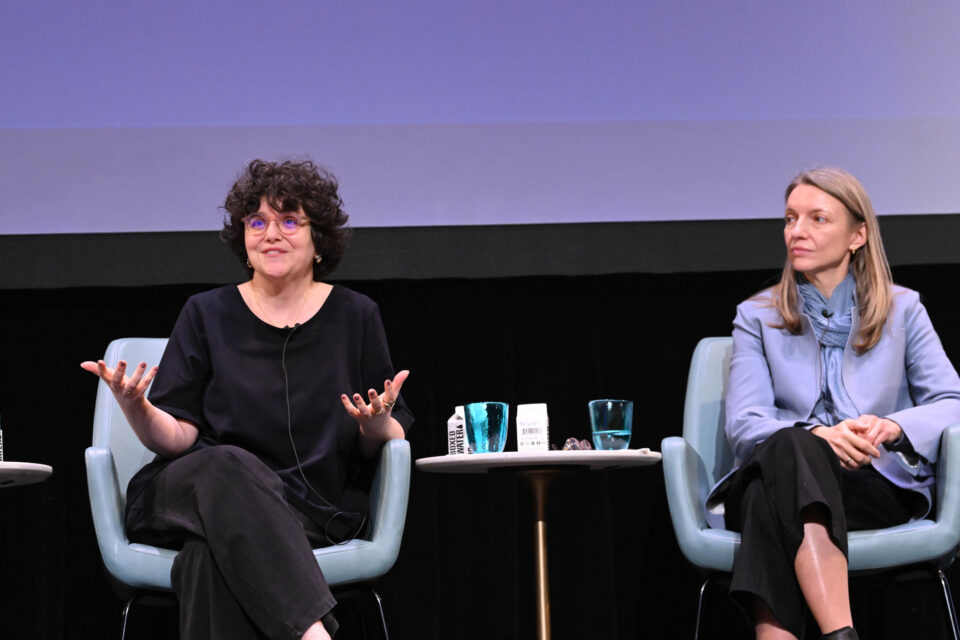
Noémie Elhadad, Associate Professor and Chair of Biomedical Informatics at the Vagelos College of Physicians and Surgeons, described her lab’s work on endometriosis—an underdiagnosed condition affecting 1 in 10 women. Traditional datasets, she said, don’t capture the daily realities of living with the disease.

Her team’s solution: the Phendo app, which gathers patient-reported data to support detection, care, and self-management.

“We’re not just modeling the disease,” she said. “We’re modeling how people live with it.”

2. Fairness Can Start with Staffing
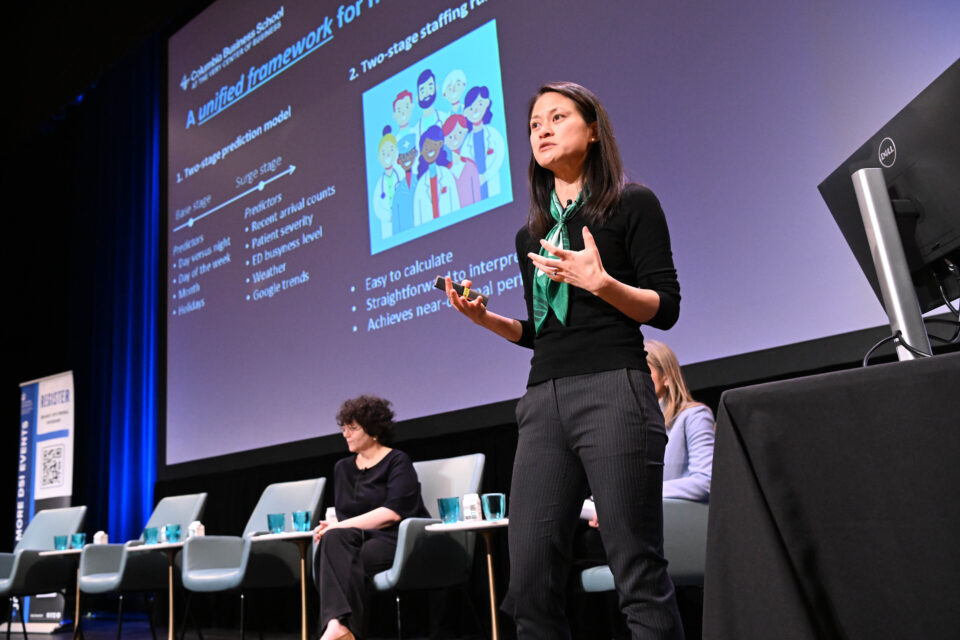
Carri Chan, John A. Howard Professor of Business at Columbia Business School, focused on resource allocation in emergency departments—where wait times, staffing levels, and patient outcomes are tightly linked.

Her team builds predictive models that use real-time and historical data to adjust nurse staffing dynamically.

“Hospitals make trade-offs every day,” she said. “Data-driven tools help us make those trade-offs more visibly—and more fairly.”

3. Causality Reveals Structural Inequity

Drago Plecko, Postdoctoral Research Scientist in the Department of Computer Science at Columbia Engineering, presented a framework for causal fairness analysis. His work focuses on identifying not just disparities, but the mechanisms behind them.

In one study, his team found that Indigenous patients in Australia were more likely to be admitted to ICUs—not because they were sicker, but because they lacked access to primary care.

“Causal tools help us move from ‘Is this biased?’ to ‘What’s driving the disparity?’” he said.

His team’s IICE Radar system tracks these patterns geographically to support targeted public health responses.

4. Models Don’t Operate in Isolation

Lena Mamykina, Associate Professor of Biomedical Informatics and the panel’s moderator, closed with a reminder about context:

“These models don’t live in a vacuum,” she said. “They live in institutions—with policies, workflows, and histories. And those systems need care, too.”

This panel offered a look at how AI can support—not sidestep—the complexity of healthcare. What emerged was a vision of alignment: between models and real-world context, between prediction and care, between systems and the people they serve.

At the Columbia University Data Science Institute, that kind of alignment shapes the work from the beginning.

More News From Data Science Day 2025

  • Five Insights from Data Science Day 2025
  • Panel 1 Recap: Where AI Is Headed — And Who’s Steering It
  • Panel 2 Recap: Designing for Trust: AI Security, Risk, and Accountability
  • Keynote Highlights: Building Systems that Scale

About the Researcher(s)

Photo of Professor Carri Chan

Carri Chan

John A. Howard Professor of Business
Decision, Risk, and Operations Division
Faculty Director Healthcare and Pharmaceutical Management Program
Healthcare and Pharmaceutical Management Program

You Might Like

Artificial Intelligence, Data and Business Analytics, Decisions, Healthcare, Practitioner Perspectives
Type
Columbia Business
Date
July 24, 2025
Artificial Intelligence, Data and Business Analytics, Decisions, Healthcare, Practitioner Perspectives

Artificial Intelligence in Healthcare: Insights from Columbia Business School Professor Carrie Chan

Step into the future of medicine, where artificial intelligence and data science are revolutionizing patient care. At Columbia Business School, Professor Carrie Chan is leading the charge, developing cutting-edge solutions that promise to enhance healthcare accessibility, improve quality, and significantly reduce costs. Explore how her groundbreaking work is transforming emergency room operations and setting new standards for efficiency in hospitals worldwide.
  • Read more about Artificial Intelligence in Healthcare: Insights from Columbia Business School Professor Carrie Chan about Artificial Intelligence in Healthcare: Insights from Columbia Business School Professor Carrie Chan
Save Article

Download PDF

More to Explore
Share
  • Share on Facebook
  • Share on Threads
  • Share on LinkedIn

External CSS

Official Logo of Columbia Business School

Columbia University in the City of New York
665 West 130th Street, New York, NY 10027
Tel. 212-854-1100

Maps and Directions
    • Centers & Programs
    • Current Students
    • Corporate
    • Directory
    • Support Us
    • Recruiters & Partners
    • Faculty & Staff
    • Newsroom
    • Careers
    • Contact Us
    • Accessibility
    • Privacy & Policy Statements
Back to Top Upward arrow
TOP

© Columbia University

  • X
  • Instagram
  • Facebook
  • YouTube
  • LinkedIn