Official Logo of Columbia Business School
Academics
  • Visit Academics
  • Degree Programs
  • Admissions
  • Tuition & Financial Aid
  • Campus Life
  • Career Management
Faculty & Research
  • Visit Faculty & Research
  • Academic Divisions
  • Search the Directory
  • Research
  • Faculty Resources
  • Teaching Excellence
Executive Education
  • Visit Executive Education
  • For Organizations
  • For Individuals
  • Program Finder
  • Online Programs
  • Certificates
About Us
  • Visit About Us
  • CBS Directory
  • Events Calendar
  • Leadership
  • Our History
  • The CBS Experience
  • Newsroom
Alumni
  • Visit Alumni
  • Update Your Information
  • Lifetime Network
  • Alumni Benefits
  • Alumni Career Management
  • Women's Circle
  • Alumni Clubs
Insights
  • Visit Insights
  • Digital Future
  • Climate
  • Business & Society
  • Entrepreneurship
  • 21st Century Finance
  • Magazine
Insights
  • Digital Future
  • Climate
  • Business & Society
  • Entrepreneurship
  • 21st Century Finance
  • Magazine
  • More 

Meaning vs. Autonomy: A Challenge in Marketing New Technologies

CBS Professor Gita Johar explores the value of manual labor and why some people resist adopting autonomous products.

Published
November 17, 2023
Publication
Digital Future
Focus On
Marketing
Jump to main content
A robot vacuum cleaner in a house
Category
Thought Leadership
Topic(s)
Artificial Intelligence, Data and Business Analytics, Entrepreneurship, Innovation, Technology

0%

If you've ever read a book with your child after dinner while a Roomba efficiently sweeps crumbs off the kitchen floor or relaxed while a robotic mower cuts your lawn, you've lived the ideal of using autonomous products. 

Many people have no difficulty delegating unwanted household tasks to self-operating machines: They run completely independently and free up valuable time that could otherwise be spent with friends and loved ones. But the latest research from Columbia Business School's Professor Gita Johar shows that for some, that free time alone might not be worth it. 

Johar, the Meyer Feldberg Professor of Business in the Marketing Division, together with her co-authors, Emanuel de Bellis and Nicola Poletti, examined the question: Why do some individuals remain uninterested in new products that could save them time and work? It's true that more than two-thirds of Americans are afraid of autonomous driving technology, while others say they worry that they will “lose control” of technology in their home. But a new study by Johar and her colleagues, “Meaning of Manual Labor Impedes Consumer Adoption of Autonomous Products,” recently published in the Journal of Marketing, found another factor: The individuals most reluctant to adopt autonomous products are those who ascribe personal meaning to household labor.  

Finding Meaning at Home

When we talk about finding meaning in domestic labor, it's easy to assume that it's something reserved for 1950s housewives on television. But this sense of meaning can be substantial even for individuals who haven't thought deliberately about how and why they experience such meaning, Johar says. “I'm not sure to what extent this is conscious and people are actually saying, 'Hey, if I adopt this Roomba, I won't get to use my vacuum cleaner,'” Johar says. “But I think it is something that underlies their resistance to adopting these products.”

This experience can vary widely across a customer base. For example, Johar explains that she personally gets little value from manual labor. “The meaning I derive is from cognitive labor, and that probably is reflected in my choice of profession,” she says. “But there are people who derive meaning from manual labor who may implicitly be resistant to adopting an autonomous product because they feel it's going to rob them of this meaning.”

The researchers were able to measure people's experience of the “meaning of manual labor” by testing autonomous products in field and experimental studies. The first qualitative study interviewed people from Asia, Europe, and North America and sought to understand how they perceived autonomous home appliances in conjunction with household work. One Chinese participant described the sense of meaning from manual chores this way: “If simple household tasks are being performed by machines and everything goes so smoothly, then you won't appreciate anything. You won't appreciate what you have.”

Reclaiming Your Time

Overcoming the public's reluctance to adopt new technology is not a new marketing challenge. Through the 19th and early 20th centuries, for instance, households were slow to trust the new wave of electric household appliances, and some even likened now-common kitchen tools to witchcraft. 
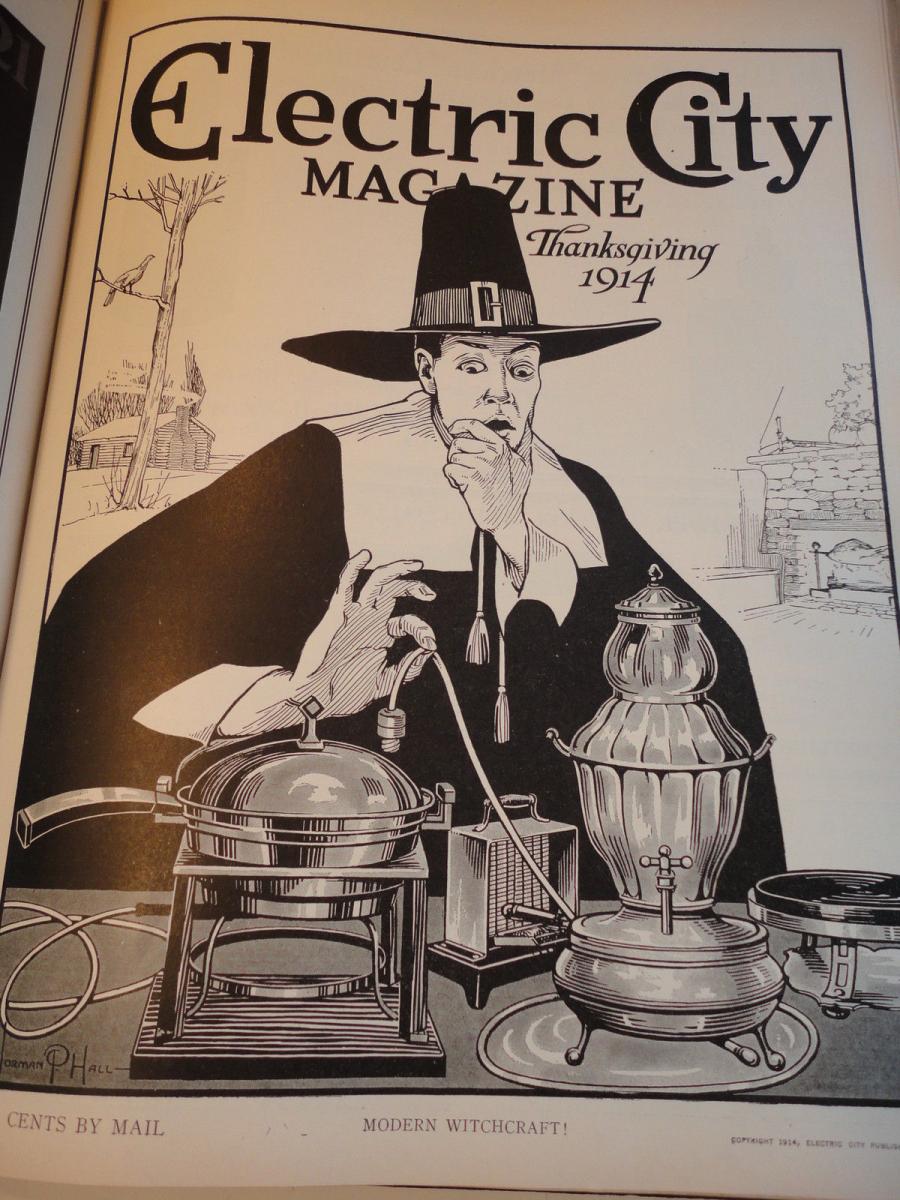
But for customers who derive meaning from household labor, Johar's research was able to isolate a strategy that can help marketers overcome these customers' resistance. Her team found that by showing consumers that autonomous products can restore their sense of meaning in other ways — for example, by giving them back time with their family — companies were able to undermine resistance and attract new customers. 

This marketing strategy has been implemented in practice. For example, hen marketing the Vorwerk Thermomix TM6, which cooks entire meals autonomously, the company explicitly emphasized the benefit of getting to spend time with family and friends in its marketing slogan: “Thermomix does the work so you can make time for what matters most.” 

“In some sense, you can say that they kind of stumbled into it,” Johar says. “They weren't really thinking, psychologically, that people derive meaning from manual labor.”

Johar's insights could prove critical to continued growth in automated labor. As of 2018, an estimated 14.2 million US households had an autonomous vacuum like a Roomba, and in 2023, 35 percent have a smart speaker. It's expected that by 2025, 57 percent will have a smart home device. Globally, the smart home industry is expected to reach $134.8 billion in 2023. But Johar's research shows that rapid growth could slow if companies don't address the loss of meaning. 

“[Finding meaning in manual labor] is a real thing, and it has real consequences in preventing people from adopting products that can make their lives more productive,” Johar says. “So, if you're taking away manual labor, you need to say you get meaning doing these other things — because family and friends turn out to be what people find most meaningful of all.”

You Might Like

Artificial Intelligence, Data and Business Analytics, Data/Big Data, AI and Transformative Tech, Digital IQ, Marketing, Technology
Date
April 08, 2025
A woman shopping in a grocery store
Artificial Intelligence, Data and Business Analytics, Data/Big Data, AI and Transformative Tech, Digital IQ, Marketing, Technology

How Gen AI Is Transforming Market Research

Generative AI is revolutionizing market research by offering unprecedented ways to understand customers, assess competitors, and extend data-driven decision-making organizationally. Research with pioneering companies reveals four key opportunities: gen AI supports existing practices by making them faster and more scalable; replaces traditional methods with synthetic data that can match conventional results with greater accuracy; fills insight gaps by providing evidence for decisions previously based on intuition; and creates innovative applications like digital twins for testing customer interactions. Survey data shows 45% of market researchers already use gen AI, with most employing it to analyze transcripts and data. While acknowledging limitations around bias and representativeness, this framework helps business leaders navigate gen AI's transformative potential in gathering customer and market insights more efficiently and effectively than ever before.
  • Read more about How Gen AI Is Transforming Market Research about How Gen AI Is Transforming Market Research
Algorithms, Data and Business Analytics, AI and Transformative Tech, Marketing, Marketplace, Media and Technology
Date
April 02, 2025
TikTok logo on a smartphone
Algorithms, Data and Business Analytics, AI and Transformative Tech, Marketing, Marketplace, Media and Technology

Why a TikTok Ban Would Boost Meta’s Ad Prices—and Hurt Small Businesses

In new research, Professors Dante Donati and Hortense Fong find that the brief TikTok outage in January benefited Meta as advertisers turned to its platforms to reach users. Small businesses, less able to switch, lost out.
  • Read more about Why a TikTok Ban Would Boost Meta’s Ad Prices—and Hurt Small Businesses about Why a TikTok Ban Would Boost Meta’s Ad Prices—and Hurt Small Businesses
Artificial Intelligence, Business and Society, Distinguished Speaker Series, Leadership, Organizations, The Workplace
Date
March 21, 2025
Walmart Chief People Officer Donna Morris, left, with Professor Stephan Meier
Artificial Intelligence, Business and Society, Distinguished Speaker Series, Leadership, Organizations, The Workplace

Walmart’s Donna Morris on Building High-Performing Teams in the Age of AI

During a conversation hosted by Columbia Business School’s Distinguished Speaker Series, the multinational retailer’s Chief People Officer shared how leaders can use AI and people-first strategies to drive workplace innovation and resilience.
  • Read more about Walmart’s Donna Morris on Building High-Performing Teams in the Age of AI about Walmart’s Donna Morris on Building High-Performing Teams in the Age of AI
Artificial Intelligence, Business and Society, DFI News & Write-Ups, AI and Transformative Tech, Future of Work, Marketplace
Date
March 13, 2025
Columbia AI Summit workshop
Artificial Intelligence, Business and Society, DFI News & Write-Ups, AI and Transformative Tech, Future of Work, Marketplace

AI-Generated Digital Twins: Shaping the Future of Business

During a Columbia AI Summit satellite workshop, faculty shared cutting-edge research on the opportunities and challenges of AI in business decision-making.
  • Read more about AI-Generated Digital Twins: Shaping the Future of Business about AI-Generated Digital Twins: Shaping the Future of Business
Save Article

Download PDF

More to Explore
Share
  • Share on Facebook
  • Share on Threads
  • Share on LinkedIn

External CSS

Homepage Breadcrumb Block

Official Logo of Columbia Business School

Columbia University in the City of New York
665 West 130th Street, New York, NY 10027
Tel. 212-854-1100

Maps and Directions
    • Centers & Programs
    • Current Students
    • Corporate
    • Directory
    • Support Us
    • Recruiters & Partners
    • Faculty & Staff
    • Newsroom
    • Careers
    • Contact Us
    • Accessibility
    • Privacy & Policy Statements
Back to Top Upward arrow
TOP

© Columbia University

  • X
  • Instagram
  • Facebook
  • YouTube
  • LinkedIn